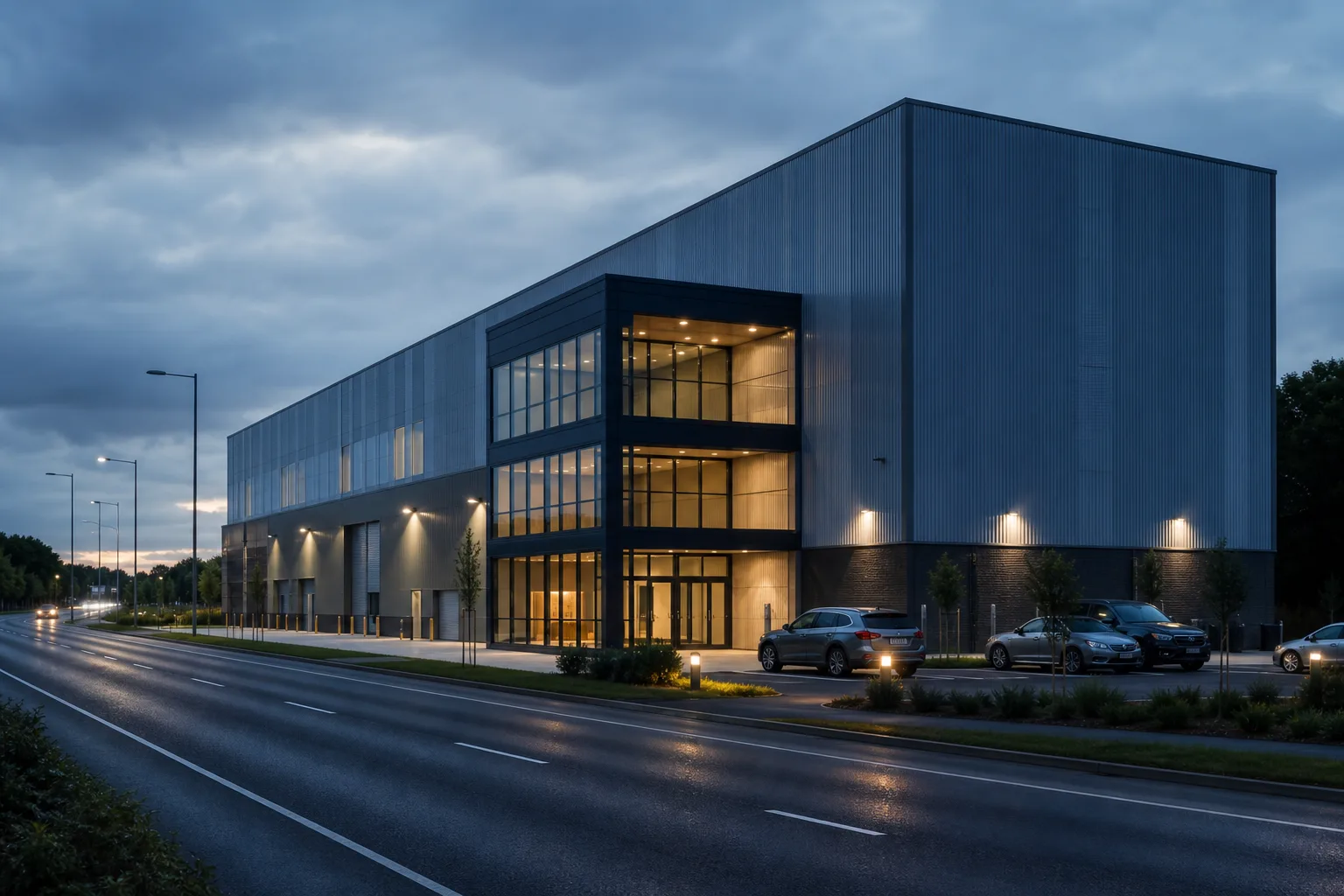
Self storage construction costs in the UK
Building a self storage facility in the UK costs between 550 and 850 pounds per square metre for the core build plus fit-out, excluding land and professional fe

Building a self storage facility in the UK costs between 550 and 850 pounds per square metre for the core build plus fit-out, excluding land and professional fees, according to PSL Limited's February 2026 construction cost data. A single-storey store typically sits at 550 to 700 pounds per square metre, while a multi-storey build runs at 700 to 850 pounds per square metre. On a 30,000 square foot store, that puts the construction budget alone in the low millions of pounds before you have bought the site or paid an architect.
Those headline ranges hide a great deal of variation, and the gap between a well-planned project and a poorly planned one is wide. This guide breaks down where the money goes, how single-storey, multi-storey, conversion and container formats compare, what drives costs up or down, and how development finance funds the build. We arrange that finance for storage developers across the UK, so we see the cost plans lenders accept and the ones they push back on.
How much does it cost to build a self storage facility in the UK?
The most reliable published benchmark comes from PSL Limited, a specialist self storage contractor, whose February 2026 figures put the core build plus fit-out at 550 to 850 pounds per square metre. That range excludes land, professional fees, planning costs and finance costs, so it is the construction line in your appraisal rather than the whole project budget. At the bottom of the range sits a simple single-storey shed on a clean, level site; at the top sits a multi-storey purpose-built store with lifts, sprinklers and a customer-facing front of house.
Translating that into project totals, a 25,000 square foot single-storey store implies a construction cost in the region of 1.3 to 1.6 million pounds, while a 50,000 square foot multi-storey store implies roughly 3.3 to 4 million pounds, before land and fees. Self storage is a long-payback asset: the SSA UK and Cushman & Wakefield 2026 annual report records average annual revenue of 27.40 pounds per square foot excluding VAT across UK stores, so the construction cost is recovered over years of trading income, not a quick sale. Getting the cost per square metre right at the outset is therefore the single biggest lever on the returns of the storage business.
What does the fit-out of a self storage facility include?
The fit-out is everything that turns an empty shell into lettable storage units: steel partitioning, roller shutter or swing unit doors, mezzanine floors, corridor systems, lighting, ventilation, and the access control, CCTV and individual unit alarms customers expect. Add the reception and office, goods lifts in multi-storey stores, trolleys, signage and the management software that runs billing and access, and the fit-out commonly accounts for a large share of the total construction figure rather than being an afterthought to the shell.
Fit-out is also where phasing saves real money. Most developers fit out 40 to 60 percent of the building at opening and hold the rest as open floor, installing further phases of partitioning as occupancy builds. That defers capital, lets you adjust the unit mix to what the local market actually rents, and matters to lenders too: a phased fit-out plan reduces the peak debt requirement and brings the income forward relative to the spend. We routinely structure development facilities with a retained tranche for later fit-out phases for exactly this reason.
How do single-storey and multi-storey builds compare?
On PSL Limited's February 2026 figures, single-storey construction runs at 550 to 700 pounds per square metre against 700 to 850 pounds per square metre for multi-storey. The premium pays for a heavier structural frame, goods lifts, stairs, more demanding fire engineering and usually a higher specification of cladding and front of house. Multi-storey stores also lose a slice of gross area to cores and corridors, so the cost per lettable square foot rises faster than the cost per gross square metre suggests.
The choice is really a land cost decision. Multi-storey makes sense where land is expensive and visibility is valuable, typically urban and edge-of-town sites, because stacking three or four floors of storage units on a small plot spreads a high land price across far more lettable area. Single-storey and drive-up formats win on cheaper land where the catchment supports the store but the site cost does not force you upwards. A good development appraisal tests both formats on the same site before the design is fixed.
Is converting an existing building cheaper than building new?
Often, yes. A conversion of an existing industrial or retail building lets you buy the shell at a price that can be well below its replacement cost, then spend on fit-out rather than groundworks, frame and roof. Former warehouses, trade units, supermarkets and department stores have all been converted into successful UK stores. The structural work is limited to strengthening floors where mezzanines are added, cutting in lifts and upgrading fire compartmentation, so the programme is usually shorter than a ground-up build and the store opens sooner.
The risks are different rather than absent. Surveys can miss asbestos, inadequate floor loadings, low eaves that prevent mezzanines, or roofs that need full replacement, and each of those eats the saving quickly. Planning is also in play if the building's current use class does not already permit storage. Lenders like conversions because the asset exists and the spend is mostly internal, but they will want an intrusive survey and a properly costed contingency before releasing funds. We arrange both bridging finance to buy the building and development or refurbishment facilities for the works.
What does a container storage site cost to set up?
Container storage is the low-capital route into the sector, and it has become the dominant format for new entrants: Cushman & Wakefield's 2026 annual report records that 40 percent of new UK store openings are container stores. Instead of a building, you buy or lease a secure yard, lay hardstanding, install fencing, gates, lighting and CCTV, and place rows of converted shipping containers that are themselves the storage units. Capital is deployed unit by unit, so a site can open with twenty containers and grow to two hundred as demand proves itself.
The trade-offs are commercial rather than constructional. Containers achieve lower rates than insulated internal units, weather and condensation management matter, and because the containers are depreciating chattels rather than buildings, some lenders give them little security value and lend mainly against the land. That changes how the funding is structured: container sites are often financed with a smaller senior facility against the yard plus asset finance or cash flow lending for the units. We know which lenders are genuinely comfortable with the format, which keeps a viable scheme from being declined by the wrong funder.
What drives self storage construction costs up or down?
Site conditions come first. Poor ground, contamination, demolition, sloping plots and constrained access all add cost before a single storage unit exists, which is why two identical buildings can carry very different budgets. Steel is the next big variable: both the frame and the partitioning system are steel-intensive, so movements in steel pricing feed straight into the build cost, and fixing prices with suppliers early protects the budget. Region matters too, with labour and preliminaries pricing higher in London and the South East than in most other UK markets.
Specification choices are where the developer has real control. A rational unit mix with standard unit sizes uses partitioning efficiently; over-complicated layouts waste corridor space and lettable area. Modular and prefabricated components shorten programmes, and every week saved is a week less of finance interest. The discipline that protects an investment most reliably is designing to the rents the local market will pay, evidenced by a proper feasibility study, rather than building to a specification the catchment cannot support.
Which hidden costs catch first-time storage developers?
The published cost per square metre excludes the items that most often sink a first budget. Professional fees for the architect, structural engineer, planning consultant and project manager add a meaningful percentage on top of the build. Planning can bring section 106 obligations, biodiversity net gain requirements and conditions whose discharge costs time and money. Utility connections, especially power upgrades for lifts and security systems, are slow and frequently underestimated, and sprinklers or enhanced fire engineering can be required late in design.
Then there are the costs of opening rather than building: management software, marketing, staff recruited before the first customer pays, and the working capital to cover operating losses while occupancy builds. The SSA UK and Cushman & Wakefield 2026 report puts average occupancy across all UK stores at 74.5 percent, with mature stores at 79.6 percent, and a new store typically takes three to five years to reach maturity. A credible budget carries a construction contingency and a separate working capital reserve, and lenders test for both.
How does development finance fund a self storage build?
Development finance is a short-term facility, usually 12 to 24 months, that funds the construction of the store and is repaid when the project refinances onto a term loan or sells. Lenders typically advance up to around 60 to 70 percent of total project cost, with the developer funding the balance as equity, and the loan is drawn in stages against certified progress rather than as a lump sum. Interest usually rolls up into the facility, so there are no payments during the build, and a monitoring surveyor signs off each drawdown.
Self storage adds a sector-specific wrinkle: the completed store has little income on day one, so the exit is normally a refinance onto a stabilisation facility or term loan once trading begins, sized against the growing EBITDA of the storage business. Lenders therefore underwrite the operator and the feasibility evidence as carefully as the build cost. We arrange the full structure, including stretched senior and mezzanine layers where the equity is tight, and we line up the exit refinance at the same time as the development facility so the two ends of the project meet in the middle.
Self storage construction costs: common questions
How much does it cost to set up a self storage business?
It depends on the format. A ground-up building costs 550 to 850 pounds per square metre for core build plus fit-out on PSL Limited's February 2026 figures, before land and professional fees, so a mid-sized store is a multi-million pound project. A conversion of an existing building is usually cheaper because the spend is mostly fit-out. A container site is the lowest-capital entry, since you can start with a secure yard and a modest number of containers and add units as demand grows.
How much is self storage per month in the UK?
The SSA UK and Cushman & Wakefield 2026 annual report records average annual revenue of 27.40 pounds per square foot excluding VAT across UK stores. As a rough illustration, that equates to around 115 pounds a month before VAT for a 50 square foot unit at the national average, though achieved rates vary widely by location, unit size and how long the customer stays.
How much does it cost to store the contents of a 3 bedroom house?
The contents of a typical three bedroom house usually need a unit of around 100 to 150 square feet. At the national average revenue of 27.40 pounds per square foot a year recorded in the SSA UK and Cushman & Wakefield 2026 report, that suggests roughly 230 to 340 pounds a month before VAT as an illustrative figure, with London stores pricing well above that and many regional stores below it.
What is the cost of constructing a warehouse compared with self storage?
A basic steel portal frame warehouse costs less per square metre than a finished self storage facility, because the storage figure includes the dense internal fit-out of partitioning, mezzanines, unit doors and security as well as the shell. That is why PSL Limited's 550 to 850 pounds per square metre range for self storage sits above plain shed costs, and why converting an existing warehouse, where the shell already exists, is often the most capital-efficient route into the sector.
Ready to talk about a real deal?
Send us the deal and we will come back with a view on fundability and likely terms within one working day.