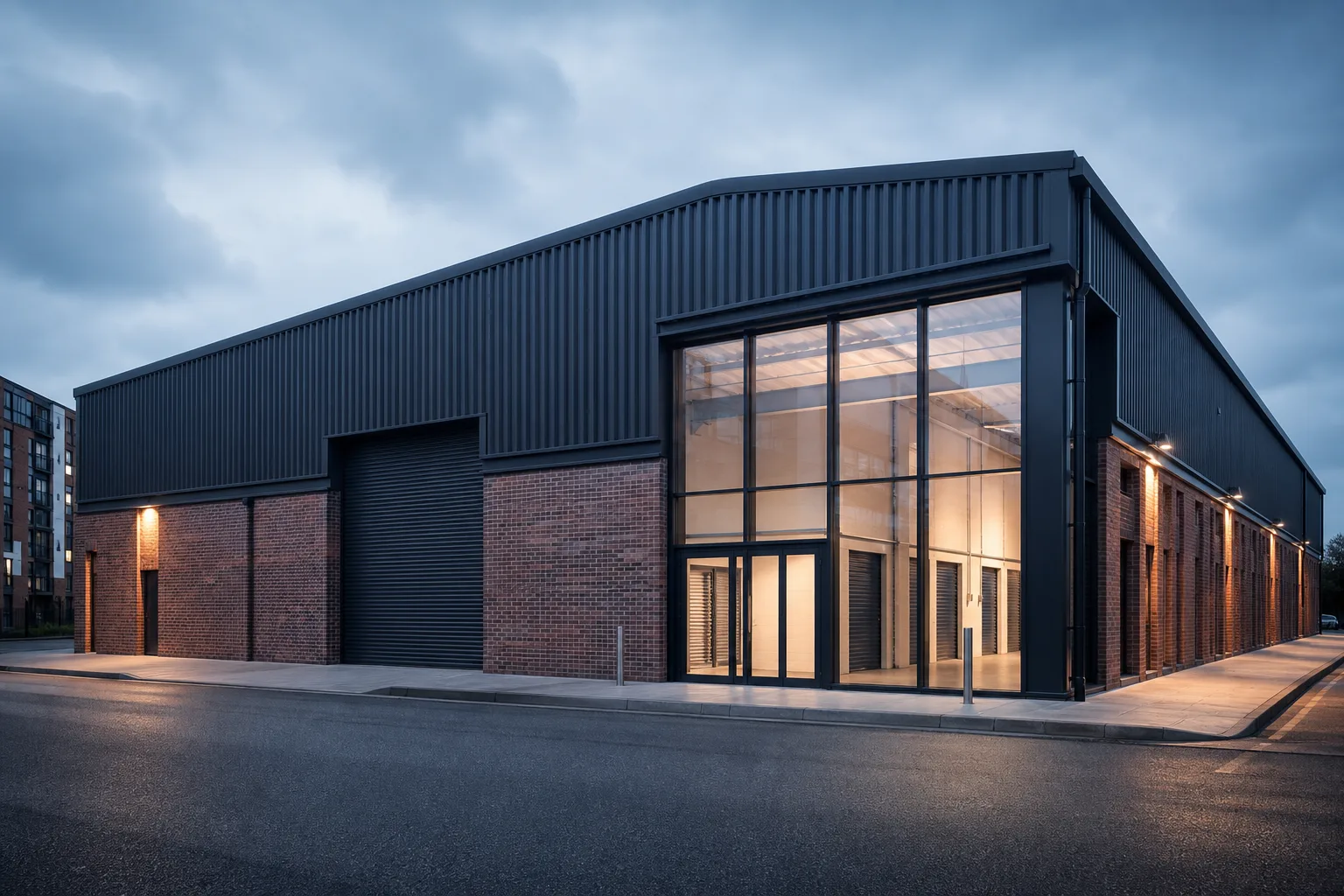
Self storage conversion finance
Funding to buy an existing building and convert it into a trading self storage facility, from acquisition through fit-out to a term refinance.

Funding conversion stores
A conversion store is a self storage facility created inside a building that started life as something else. Warehouses and industrial units are the natural candidates because the clear internal space takes mezzanine floors and partitioning readily, but retail units, office buildings, car parks and even farm buildings are converted successfully where the catchment supports it. The appeal is speed and cost: a conversion gets a storage business trading faster and for less capital than a ground-up build.
The finance follows the project in stages. The building is usually bought with bridging or acquisition finance, the fit-out of storage units is funded against cost, and once occupancy and income have built the whole position refinances onto a commercial mortgage sized on the trading valuation. We arrange each stage; the fit-out itself is delivered by specialist contractors.
What we fund
- Warehouse and industrial unit conversions with mezzanine floors added
- Retail and office building conversions in town-centre catchments
- Car parks, mills and farm buildings repurposed for storage units
- Phased fit-outs that add capacity as occupancy builds
- Existing self storage businesses extending into adjoining space
Indicative terms
- Typical lot size (indicative)£500k to £10m
- Purchase funding (indicative)Bridging up to ~70 to 75% of purchase price
- Fit-out funding (indicative)Sized against cost, often phased
- Bridging pricing (indicative)From ~0.75% per month
Indicative only. Terms vary by lender, asset and borrower and are not an offer of finance.
How a self storage conversion is financed
We arrange the capital for every stage of a conversion. The building purchase typically runs on bridging finance or acquisition finance, because the asset is not yet producing storage income and a conventional mortgage cannot be sized against it. The fit-out of mezzanine floors, partitioning, lifts and security is funded against cost, either within a single development-style facility covering purchase and works together or as a drawdown alongside the bridge. Once the store is open and rental income is building, we refinance the whole position onto a commercial mortgage sized on the trading valuation, repaying the short-term debt. We act as arranger and introducer throughout, not as a lender.
How lenders underwrite conversion projects
Lenders look at a conversion as two linked questions: is the building right, and will the storage business work. On the building they test the location and visibility, floor loadings and ceiling heights for mezzanine installation, access for customers and the planning permission position, since storage use generally sits in Class B8 and a change of use is often needed when converting retail or office space. On the business they underwrite the demand in the catchment, the competition, the proposed unit mix and pricing, and the operator's plan for the occupancy build-up. Because a conversion is cheaper and faster than ground-up development, many lenders read it as lower risk, provided the fit-out costings are credible. We package the building evidence and the business plan together so the lender can underwrite both sides at once.
The market for conversion self storage stores
Conversions are how a large share of UK self storage capacity has been created, and they remain the most common entry route into the sector for new operators. A converted warehouse in the right catchment can trade every bit as strongly as a purpose-built store. For owners the exit routes are the same as for any trading storage business: a refinance onto cheaper term debt once stabilised, a sale to one of the consolidators that actively buy trading stores, or a long hold on the income.
Finance that suits this asset class
- Bridging financeBuying the building before storage income exists to service a mortgage.
- Development financeFunding purchase and fit-out together against project cost.
- RefinanceMoving onto term debt once the converted store is trading.
Useful calculators
Related guides
Fund a conversion stores deal
A view on fundability within one working day.
Which buildings can be converted to self storage?
Warehouses and industrial units lead the field. Clear-span space, good floor loadings and decent eaves height let a fit-out contractor install mezzanine floors and partitioning efficiently, multiplying the lettable area, and the location profile of industrial stock often matches where storage demand sits.
Retail and office buildings work in the right circumstances, and town-centre conversions have grown as both uses have shed space. The wins are visibility and proximity to the customer; the challenges are floor-to-floor heights, lift capacity and the change of use through planning. Car parks, mills and agricultural buildings also convert.
Do you need planning permission to convert a warehouse to self storage?
Self storage is generally treated as a storage and distribution use within Class B8, so converting an existing warehouse or industrial unit often involves no change of use at all. Even then, external alterations, signage and any extension can need consent, and conditions on the existing permission should be checked.
Converting retail, office or other non-industrial buildings usually does require a change of use to B8 through a planning application. Outcomes turn on local policy and the case made for the scheme, and timescales need building into the funding plan, because a bridging facility has to run long enough to cover the planning process as well as the works. We size the term of the short-term debt around the real programme, not the hoped-for one.
What does a self storage fit-out involve and what does it cost?
A conversion fit-out turns open floorplates into rentable storage units: mezzanine floors to multiply the area, steel partitioning and doors to divide it, lifts and stairs for upper-level access, then lighting, CCTV, individually alarmed units, access control and a reception. Specialist fit-out contractors deliver this as a packaged design and install, and phasing is normal.
Costs vary widely with the building, so we treat the contractor's priced design plus a sensible contingency as the basis for funding. What matters for the finance is that the cost stack is evidenced and the drawdowns match the build programme. We are the finance side of that conversation only; we do not design or deliver fit-outs, and we work alongside whichever contractor the operator chooses.
How do you fund the purchase before the store is trading?
A building bought for conversion produces no storage income on day one, so the purchase runs on bridging finance or acquisition finance underwritten against the asset and the plan rather than current earnings. Indicatively a bridge advances up to 70 to 75 percent of the purchase price from around 0.75 percent per month, with interest typically rolled or retained.
Where the operator already owns property, cross-charging other assets can lift the advance and cut the cash required. And where purchase and works are funded together, a single facility with a works drawdown is often cleaner than separate loans. We compare both routes on each deal, and where the equity available is thin, mezzanine finance can sit behind the senior facility to complete the capital stack.
When can a conversion refinance onto a commercial mortgage?
The exit from the short-term debt is a refinance onto a commercial mortgage once the store is open and income has built. Lenders sizing the term loan look at the trading evidence: EBITDA, occupancy against plan and the net achieved rate per square foot. Indicatively a stabilised store supports up to 60 to 70 percent of its trading valuation, and because that valuation reflects the storage business rather than the empty shell, the refinance usually repays the bridge and the fit-out funding comfortably.
Timing is the judgement call. Refinancing early cuts the cost of funds sooner but the immature trading record caps the advance; waiting for stabilisation maximises the valuation but extends the period on bridging pricing. We often split the difference: an initial term facility once income covers debt service, then a reset toward full leverage as the store matures.
Worked example: warehouse conversion to trading store
Take an illustrative project: an operator buys a 30,000 sq ft warehouse on a main road for £1.2m and plans a phased fit-out costing £900k, installing a mezzanine to take the maximum lettable area to around 40,000 sq ft. These figures are illustrative only, not a quote, and a real facility would be sized on the actual building, costings and valuation.
The purchase runs on a bridging loan at 70 percent of the price, advancing £840k with interest rolled, while the operator funds the balance and the first fit-out phase from equity. A works drawdown alongside the bridge funds the remainder of the fit-out, with funds released against certified fit-out progress.
The store opens with the ground floor trading while the mezzanine level is fitted out behind it. Suppose that by month thirty occupancy and rates produce £450k of revenue and around £270k of EBITDA. A trading valuation at that point might support a commercial mortgage at 65 percent loan to value, repaying the bridge and works funding in full and putting the operator on term pricing for the hold. The uplift in value created by converting an empty warehouse into a trading self storage business is the operator's.
Illustrative worked example only. Figures vary by lender, asset and borrower and are not an offer of finance.
Frequently asked questions
Do I need planning permission to convert a building to self storage?
If the building is already in industrial or storage use, conversion to self storage often needs no change of use because the use generally sits within Class B8, though alterations and signage may still need consent. Converting retail, office or other buildings usually requires a planning application for change of use.
Can I get a mortgage on a building I am converting to self storage?
Not a conventional one at the outset, because there is no trading income to underwrite. The purchase is normally funded with bridging or acquisition finance, the fit-out against cost, and the position then refinances onto a commercial mortgage once the store is open and income supports debt service.
Is a conversion cheaper than building a self storage store from scratch?
Generally yes. A conversion reuses an existing structure, so the capital requirement is lower and the store opens sooner than a ground-up scheme.
Do you handle the fit-out as well as the finance?
No. We are finance only: we arrange the purchase funding, the fit-out funding and the refinance, and we work alongside the specialist fit-out contractor the operator appoints.
Funding a conversion stores asset?
Tell us about the deal and we will come back with a view on fundability and likely terms.