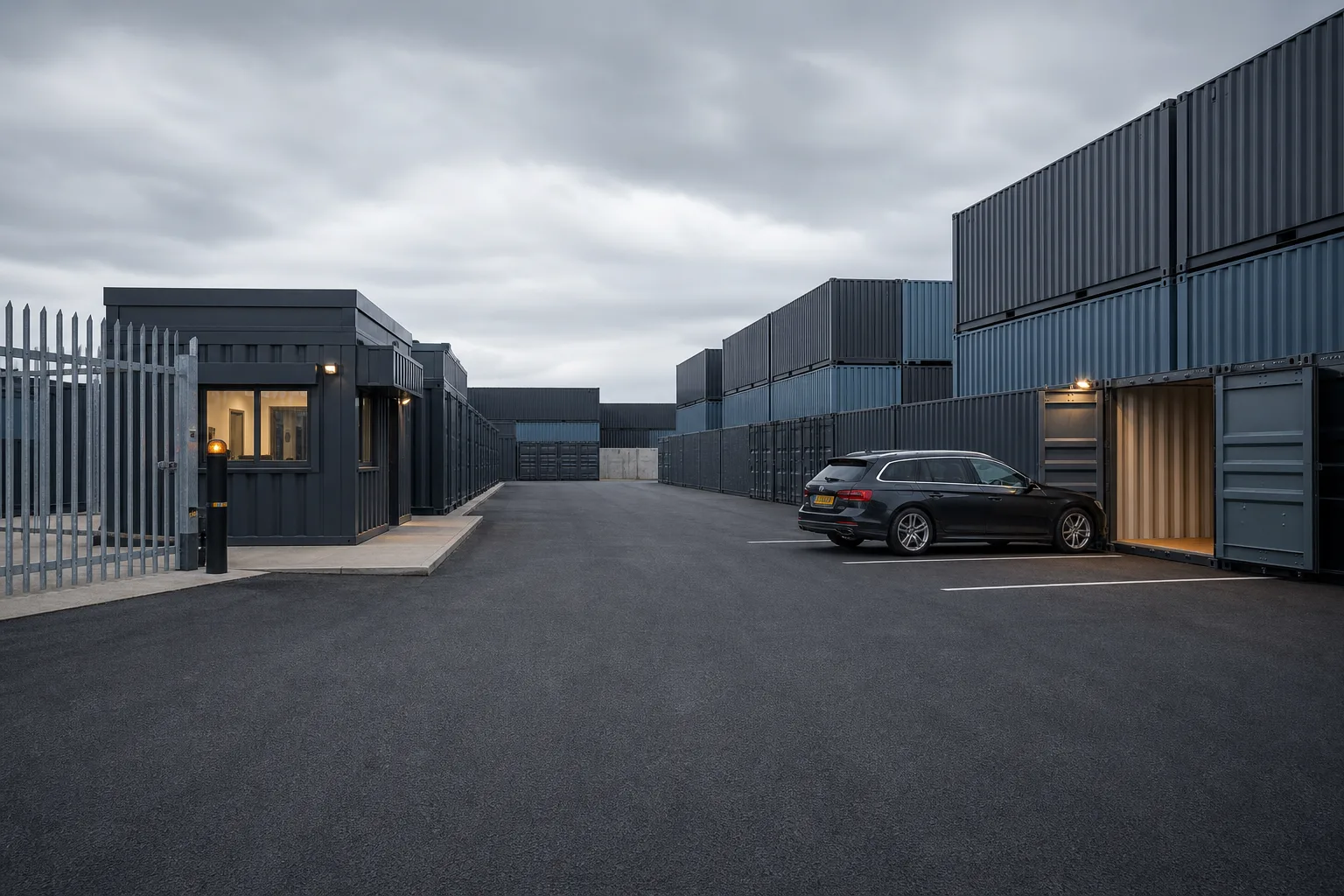
Container storage site finance
Funding for shipping-container self storage on open land, the lowest-cost and fastest entry route into the storage business.

Funding container sites
A container storage site is the simplest form of self storage: rows of shipping containers on hardstanding or open land, let to households and businesses as individual storage units. Entry costs are the lowest of any facility type and the route to trading is the fastest, since containers can be delivered and let within weeks of a site being secured.
The finance splits in two: the land is property, funded with bridging, acquisition finance or, once trading, a commercial mortgage, while the containers are plant, often funded separately on asset finance. Lenders treat container sites as less institutional than purpose-built or conversion stores, so structuring the two halves well is most of the job; we arrange both sides and the refinance that eventually pulls them together.
What we fund
- Shipping containers on hardstanding, yards and open storage land
- Sites from a handful of containers to several hundred units
- Mixed sites combining container storage with open and vehicle storage
- Entry-level sites for first-time operators building a trading record
- Stepping-stone sites ahead of a permanent purpose-built store
Indicative terms
- Typical entry (indicative)Sites from around £250k
- Land funding (indicative)Bridging from ~0.75% per month
- Container funding (indicative)Asset finance over the units themselves
- Trading LTV (indicative)Up to ~60 to 70% once income is proven
Indicative only. Terms vary by lender, asset and borrower and are not an offer of finance.
Financing the land and the containers separately
We arrange container storage funding in its two natural parts. The land is bought with bridging finance or acquisition finance, indicatively from around 0.75 percent per month on bridging. The containers themselves are usually funded on asset finance or hire purchase, spreading their cost over their working life and keeping the property debt clean. As the site fills and rental income becomes provable, we refinance the whole position onto term debt sized against the trading valuation of the storage business, indicatively up to 60 to 70 percent. We are an arranger and introducer across all of it, not a lender.
How lenders view container self storage
Lenders treat container sites differently from purpose-built and conversion stores. The containers are movable plant rather than part of the property, so a property lender values the land and the income but not the boxes, while an asset finance funder looks at the containers and the covenant behind the agreements. The income is real but reads as less institutional, with shorter site histories, open-air operations and sometimes planning positions resting on established use rather than an explicit permission. Underwriting therefore leans heavily on the basics: a clean planning position, a secure and well-run site, evidence of demand in the catchment, and once trading, EBITDA and occupancy that can be verified. We present container deals to the narrower list of lenders that genuinely like the format.
The market for container storage sites
Container storage occupies the entrepreneurial end of UK self storage. Sites are numerous and locally owned, often started by landowners putting yards to work, and the format thrives where customers want cheap, drive-to storage units rather than a climate-managed indoor store. For owners the market offers several exits: trading sites change hands as going concerns; land with an established storage use can carry value beyond the trading income; and many operators exit upward, funding a permanent store from the trading record and the land. A container site with clean books and a settled planning position is a far more bankable asset than the format's image suggests.
Finance that suits this asset class
- Bridging financeBuying the land quickly before the site produces income.
- Acquisition financeFunding the purchase of an established trading container site.
- RefinanceConsolidating land and container debt onto term funding once trading.
Useful calculators
Related guides
Fund a container sites deal
A view on fundability within one working day.
Is a container storage business a good investment?
Judged on capital required against income produced, container storage is one of the most accessible routes into self storage. The containers are productive almost immediately, the build programme is measured in weeks, and a site can open with a dozen units and grow box by box as demand proves itself, so the investment scales with the revenue rather than ahead of it.
The trade-offs are real. Achieved rates sit below indoor storage units, customers are more price-led, and the asset is less institutional, which shows up in a narrower lender pool and more conservative leverage. Whether a given site is a good investment comes down to the land cost, the catchment and the operator, not the format.
How much does it cost to start a container storage site in the UK?
Entry costs vary with land values, but viable sites start at around £250k all-in on an indicative basis where land is cheap or already owned. The main cost lines are the land, the hardstanding and drainage works, fencing, gates, CCTV and lighting, and then the containers themselves.
The funding follows those lines. Land runs on bridging or acquisition finance, site works fund from equity or within the land facility, and the containers go on asset finance so the cash cost is spread over years rather than paid on delivery. Growth is then incremental: most operators add containers in batches as occupancy fills, funding each batch on a further asset finance agreement.
What planning permission does a container site need?
Planning is the single most important diligence item on a container site. Siting containers on land and operating storage from it generally needs planning permission, typically as open storage or storage and distribution within Class B8, and the fact that containers are movable does not by itself take the use outside planning control.
Conditions matter as much as the permission: hours of access, container heights and stacking, and surfacing requirements can all shape what the site can earn, and a site licence may also apply depending on what is stored. We flag planning early because it sets the funding terms: a site with clean consent for the use funds at better leverage and pricing than one with an ambiguous position.
How is the trading income underwritten once the site is running?
Once trading, lenders underwrite a container site like any self storage facility: EBITDA, occupancy and the net achieved rate per unit or per square foot. The difference is evidential: a container site needs to show the same discipline as an indoor store, with clean records of lettings, rates, arrears and churn.
That bookkeeping has direct funding value. A site that can evidence two or three years of consistent income supports a refinance onto term debt at up to 60 to 70 percent of a trading valuation on an indicative basis, replacing bridging and asset finance with one cheaper facility. A site with the same real income but ragged records funds at lower leverage or not at all.
Can a container site become a permanent self storage store?
Very often, yes, and it is one of the most common growth stories in the sector. The container site proves the catchment with hard trading data, the land is already owned, and the established storage use helps the planning case for a permanent building.
The funding for that step-up is staged: equity is released from the land and the trading income, development finance funds the new building against cost, and the container income can keep running through the build, softening the carry. Once the permanent store stabilises, the whole position refinances onto a commercial mortgage as a single trading asset. Where the ambition is there from the start, we structure the early debt so it does not block the later scheme.
Worked example: yard to trading container site
Take an illustrative start-up: an operator buys a one-acre yard with hardstanding for £300k and plans an initial deployment of 40 containers. All figures here are illustrative only, not a quote, and any real facility would be sized on the actual site, planning position and trading record.
The land is bought on a bridging loan at 70 percent of the purchase price, advancing £210k at an indicative 0.75 percent per month with interest rolled, while fencing, CCTV and gates are funded from equity. The 40 containers go on a hire purchase agreement, so the cash cost of the units is spread over several years and the first lettings start within weeks of completion.
Suppose the site lets up steadily and after two years runs at a healthy occupancy producing around £120k of annual revenue with limited operating costs. With clean records and the planning position confirmed, the operator refinances onto a term facility against the trading valuation of the site, repaying the bridge and adding a second batch of containers on a further asset finance agreement. From there the choice is the one the format is built for: keep compounding container income, sell the site as a going concern, or raise development finance for a permanent store.
Illustrative worked example only. Figures vary by lender, asset and borrower and are not an offer of finance.
Frequently asked questions
Is a container storage business a good business to start?
It is the lowest-cost and fastest entry route into self storage, which makes it attractive for first-time operators and landowners with surplus yards. Returns depend on the land cost, the catchment and how well the site is run rather than on the format itself.
How profitable is a container storage site?
Operating costs are low because there is no building to run, so a well-let site converts a high share of revenue into earnings, though achieved rates per unit sit below indoor storage. Lenders judge profitability from the site's own books, which is why clean records matter as much as the income itself.
How do I finance starting a container storage business in the UK?
Typically in two parts: the land on bridging or acquisition finance, indicatively from around 0.75 percent per month on bridging, and the containers on asset finance or hire purchase so their cost is spread over time. Once the site is trading, the position refinances onto term debt sized against the income.
Do shipping containers on my land need planning permission?
Operating container storage from land generally needs planning permission, usually as open storage or Class B8 use, and the fact that containers are movable does not by itself avoid planning control. A clean planning position is also central to the funding terms a site can achieve.
Funding a container sites asset?
Tell us about the deal and we will come back with a view on fundability and likely terms.